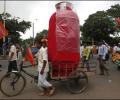
Delhi Police busted an illegal LPG refilling and hoarding racket in Nangloi, seizing 96 domestic gas cylinders, vehicles, and equipment. Three people were arrested for diverting LPG cylinders meant for delivery and illegally refilling and selling them in the open market.
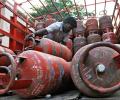
The Delhi Police have dismantled several illegal LPG refilling and black-marketing operations across Delhi, arresting 16 individuals and seizing a large number of cylinders and equipment.
Delhi Police have arrested a 61-year-old man and busted an illegal LPG refilling racket in southwest Delhi's Dabri area, seizing 17 cylinders.
Delhi Police busted two illegal LPG hoarding and refilling rackets, seizing 125 cylinders and arresting three delivery agents.
Indore authorities have filed a criminal case against the operator of an illegal LPG warehouse after discovering 66 cylinders and refilling equipment.
Delhi Police have dismantled an illegal operation involving the storage of over 600 LPG cylinders and arrested an individual for illegally refilling gas cylinders, highlighting concerns over safety and black market activities.
Delhi Police have arrested three individuals for operating an illegal LPG storage and refilling racket in the Palam area, seizing numerous cylinders and equipment.
Delhi Police have dismantled two illegal LPG hoarding and refilling operations in separate raids across the city, seizing a total of 248 cylinders and apprehending five individuals involved in the illicit activities.
Delhi Police have dismantled multiple illegal LPG storage and refilling units across the city, seizing a large number of cylinders and apprehending several individuals involved in the illicit operations.

The government on Thursday restored liquefied petroleum gas (LPG) supplies to commercial consumers such as hotels, restaurants and other businesses to pre-crisis levels, and lifted sector-specific restrictions imposed during the recent West Asia conflict, in a sign that energy supply concerns are easing as global markets stabilise.
Delhi Police have registered multiple FIRs and seized hundreds of LPG cylinders in a crackdown on illegal storage, refilling, and black marketing operations amid concerns of potential supply shortages.

India continues to face LPG supply challenges for the third consecutive week due to disruptions caused by the West Asia conflict, though panic buying is showing signs of easing. The government is prioritising domestic household supplies and encouraging alternative fuel sources.
Uttar Pradesh authorities have launched a statewide crackdown on black marketing of LPG and other essential commodities, resulting in FIRs against distributors and arrests.

The government is identifying households with both liquefied petroleum gas (LPG) and piped natural gas (PNG) connections to enforce a ban on dual ownership, aiming to curb misuse and better target subsidies amid global energy supply disruptions.
Delhi Police arrested three individuals in Shaheen Bagh for allegedly hoarding and black marketing domestic LPG cylinders. The accused were caught after a raid and found to be illegally transferring subsidised gas for profit.
The government has assured citizens that there is no need to panic book LPG cylinders, as uninterrupted supply to households is being ensured despite the ongoing conflict in West Asia.
Delhi Police arrested three men in Mahipalpur for illegally hoarding LPG cylinders and selling them at inflated prices. The raid uncovered a large number of domestic and commercial cylinders, along with refilling equipment.

Despite international crude oil rates crossing USD 100 per barrel due to Middle East tensions, the Indian government plans to maintain current petrol and diesel prices, ensuring uninterrupted fuel supply across the country.
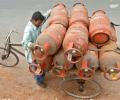
Argentina has significantly increased its LPG exports to India to help mitigate shortages caused by the ongoing conflict in West Asia. This partnership is becoming increasingly important for India's energy security.

Petroleum Minister Murli Deora on Monday launched the service, which will be initially available in the national capital and would be extended to other metropolitan cities, state capitals and towns.
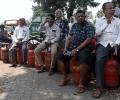
India restricts subsidised LPG connections for households with piped natural gas (PNG) to ensure equitable distribution and address global energy supply concerns, pushing for faster PNG adoption.

'It would be similar to what happened during COVID-19.' 'They are not just losing income, but being pushed into distress.'

Domestic LPG and commercial cylinder prices in India have seen a significant increase, driven by rising global energy costs linked to the conflict in West Asia. This marks the second price hike in less than a year, impacting households and businesses.
A 28-year-old man was arrested in Delhi for illegally selling LPG cylinders, leading to the recovery of 62 cylinders and a vehicle. The accused was selling cylinders without authorisation and at inflated prices.

The ministry of petroleum and natural gas on Friday reiterated that India has sufficient stock of crude oil, petrol and diesel, while ensuring an uninterrupted supply of LNG and LPG despite disruptions caused by the ongoing West Asia conflict.
Indian eateries are adapting to the LPG crisis by cutting menus, increasing prices, and switching to alternative fuels like coal, as LPG supplies are disrupted due to global events. State authorities are cracking down on hoarding and black marketing of LPG cylinders.
An FIR has been filed against a gas agency in Lucknow for allegedly illegally storing domestic LPG cylinders and attempting to sell them on the black market.

The government has mandated that cooking gas LPG supply to households will be discontinued if consumers fail to switch to piped natural gas where such connectivity is available, under a new order aimed at accelerating gas network expansion and reducing reliance on a single fuel.

The Central government has assured the Bombay High Court that it is taking steps to address the LPG shortage caused by the conflict in West Asia. The court accepted the submission and disposed of a petition filed by LPG distributors.

India imports nearly 60 percent of its LPG, with most cargo previously coming through the Strait of Hormuz, now closed for commercial shipping.

A former Indian Army captain, who had been on the run for four years after being convicted of his wife's murder, has been arrested after police traced him through an LPG cylinder booking.

The reopening of the Strait of Hormuz, following a ceasefire agreement between the US and Iran, is expected to significantly ease India's crude oil supply risks, lower freight costs, and reduce inflationary pressures, as global oil prices have already dropped.

'Why are the political leaders saying everything is normal?'
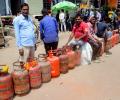
The Indian government has implemented several measures to mitigate external risks, support the balance of payments, and maintain macroeconomic stability amidst the ongoing West Asia crisis, according to Minister of State for Finance Pankaj Chaudhary.

The Indian government has reassured citizens that the country has sufficient reserves of petrol, diesel, and LPG, and that refineries are operating at high capacity despite global supply chain disruptions. They have urged citizens to avoid panic buying and hoarding.

India significantly increased piped natural gas (PNG) connections in March as the government accelerates the expansion of cleaner fuel networks amid global supply disruptions.

The Indian government has increased measures to secure fuel and gas supplies following the Strait of Hormuz closure, urging citizens to avoid panic buying. Refineries are operating at high capacity, and sufficient stocks of petrol and diesel are available nationwide.

The government has dismissed speculation of an imminent increase in petrol and diesel prices, assuring citizens that there are no plans for a hike despite rising crude oil costs.

The escalating conflict in West Asia has resulted in 19 ships carrying essential energy resources for India being stranded in the Strait of Hormuz, raising concerns about potential disruptions to the country's energy supply.

The government has introduced a mandatory 25-day gap between LPG cylinder bookings due to supply concerns arising from global disruptions and tensions in the Strait of Hormuz. This measure aims to prevent hoarding and prioritise essential non-domestic sectors, while domestic LPG production is being increased to mitigate shortages.
